Greenwich Historical Society

  • Home
  • Blog
  • Programme
  • Journal
  • Join Us
  • About Us
  • Links
  • Contact Us

April 25. Bohemian Greenwich: In and out of the Eagle. Horatio Blood.

16th April 2018 By ghsoc_admin Leave a Comment

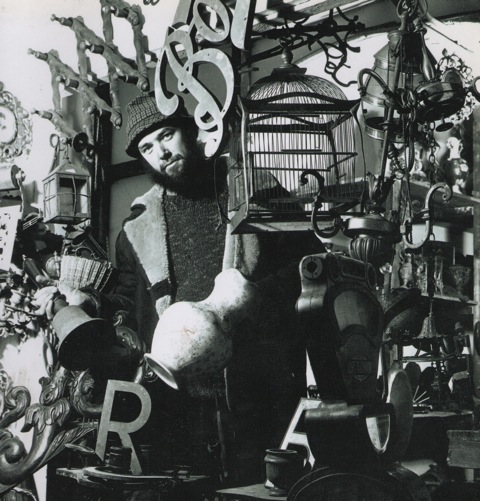
Horatio Blood celebrates the distinctive milieu of twentieth century Greenwich and explores its decidedly Bohemian flavour. He casts a particular eye upon The Spread Eagle in Nevada Street – the best junk shop in the world – at the heart of Dick Moy’s extraordinary empire, which exerted its influence on Greenwich for almost half a century.

April 25th 2018 at James Wolfe Royal Hill Campus. Meetings commence at 7.30, doors open 7.15. We welcome non-members, from whom we invite a donation of £3 for each meeting.

Image: Dick Moy in the 1960s
 

Filed Under: Programme

London 1840 model takes shape in Greenwich workshop

6th April 2017 By ghsoc_admin Leave a Comment

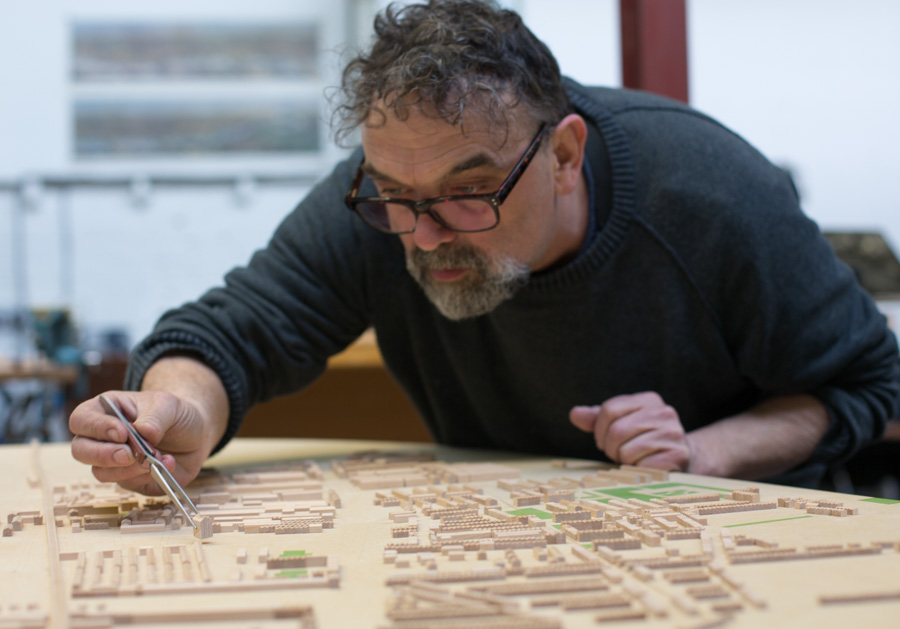
Some of the GHS Council paid a trip this week to the workshop within the Old Royal Naval College where architectural historian Andrew Byrne and model-maker Dave Armitage have been toiling away on the London 1840 project – members may remember that we received a short introduction to the ambitious project by Andrew last year.

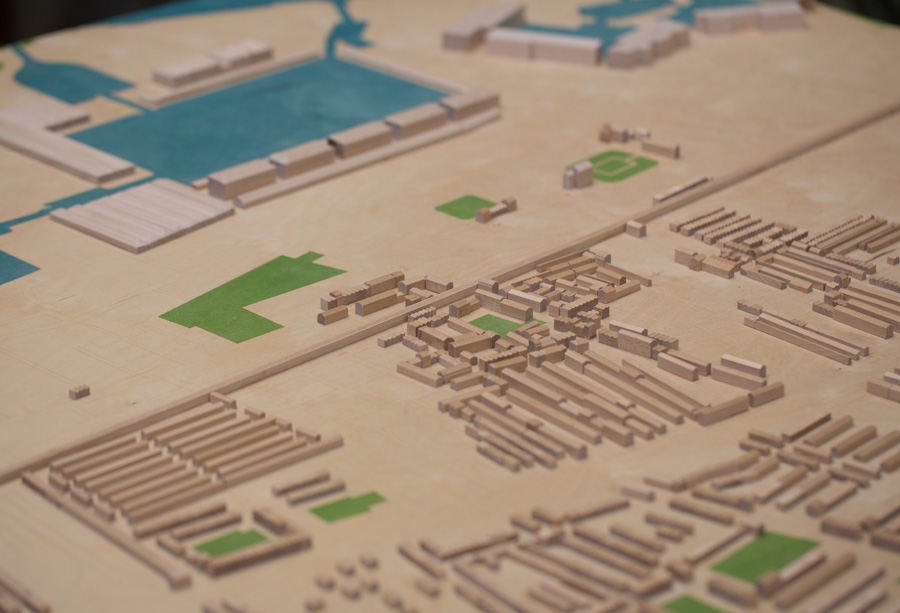
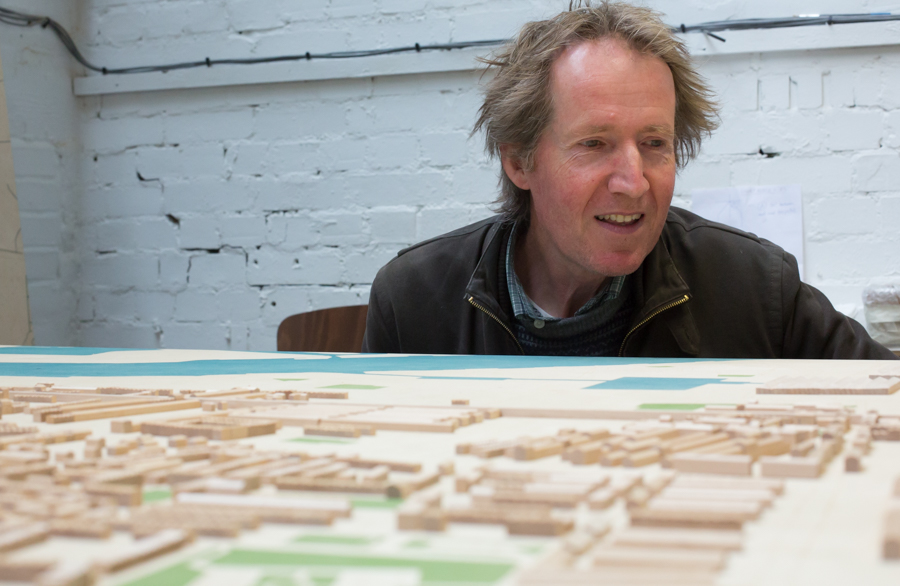
Their task is a daunting one: to create a 1/1500 scale model of the whole of London as it was in 1840 with every building in the city researched, using various archives and photography, and then recreated with an accurate representation of its size, profile and roof.

The finished project will be some 30ft by 20ft, approximately, so the city has been broken down in to modular sections like large jigsaw pieces to enable them to work on it in the space which has been made available to them.

We were able to view the work which has been done on a section of East London which includes St Katharine Docks, London Dock and one of the large sugar warehouses that would have dominated the area then. This section is to be shown soon in Tower Hamlets Archives’ Mapping the Hamlets exhibition, coming soon. As work continues, it is hoped there may be other opportunities to show off sections before a home is eventually found the finished work.

Andrew says he’d always wanted to build a time machine and this project is the next best thing. We wish London 1840 well and look forward to following their progress. A new website will be launched for the project in the coming weeks and we’ll update his post when that is available.


Andrew looks down at the 1/1500 scale model of London


Model maker Dave Armitage delicately places a property on to the East London section.


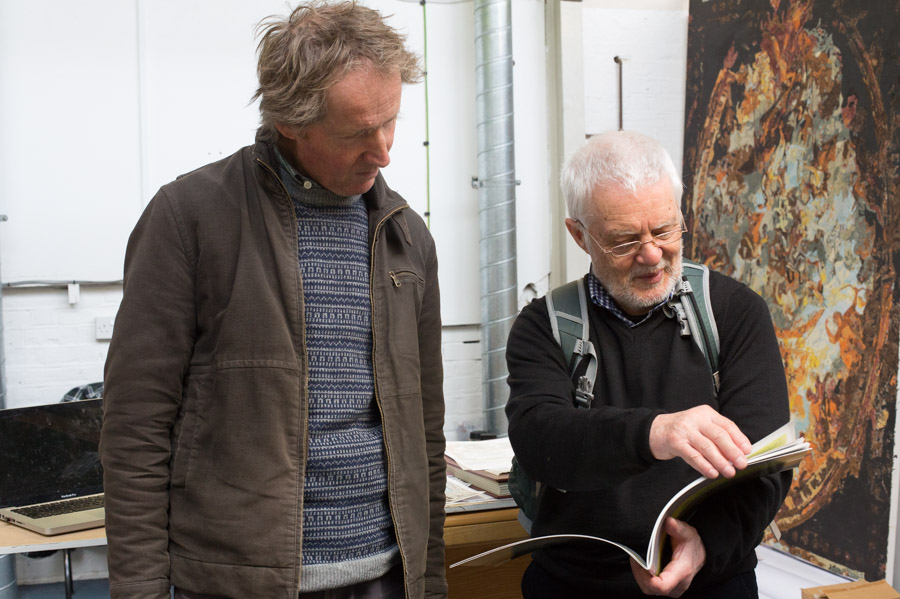
Andrew and Julian Watson look through the Greenwich Revealed book which Julian co-authored with Neil Rhind.


East London at 1:1500 scale.


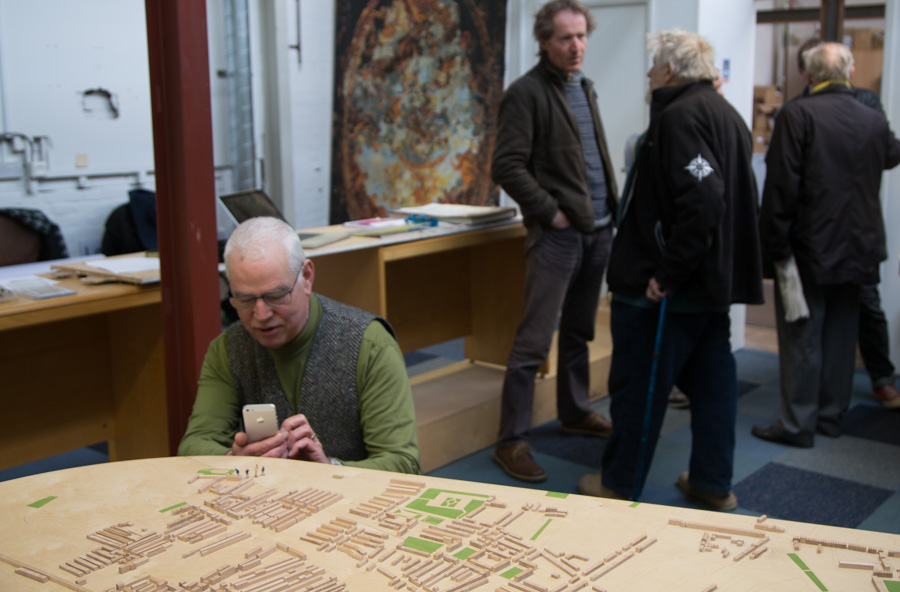
Our president Anthony Cross takes a photo of the impressive piece of work which is still only in its early stages.

Filed Under: Blog

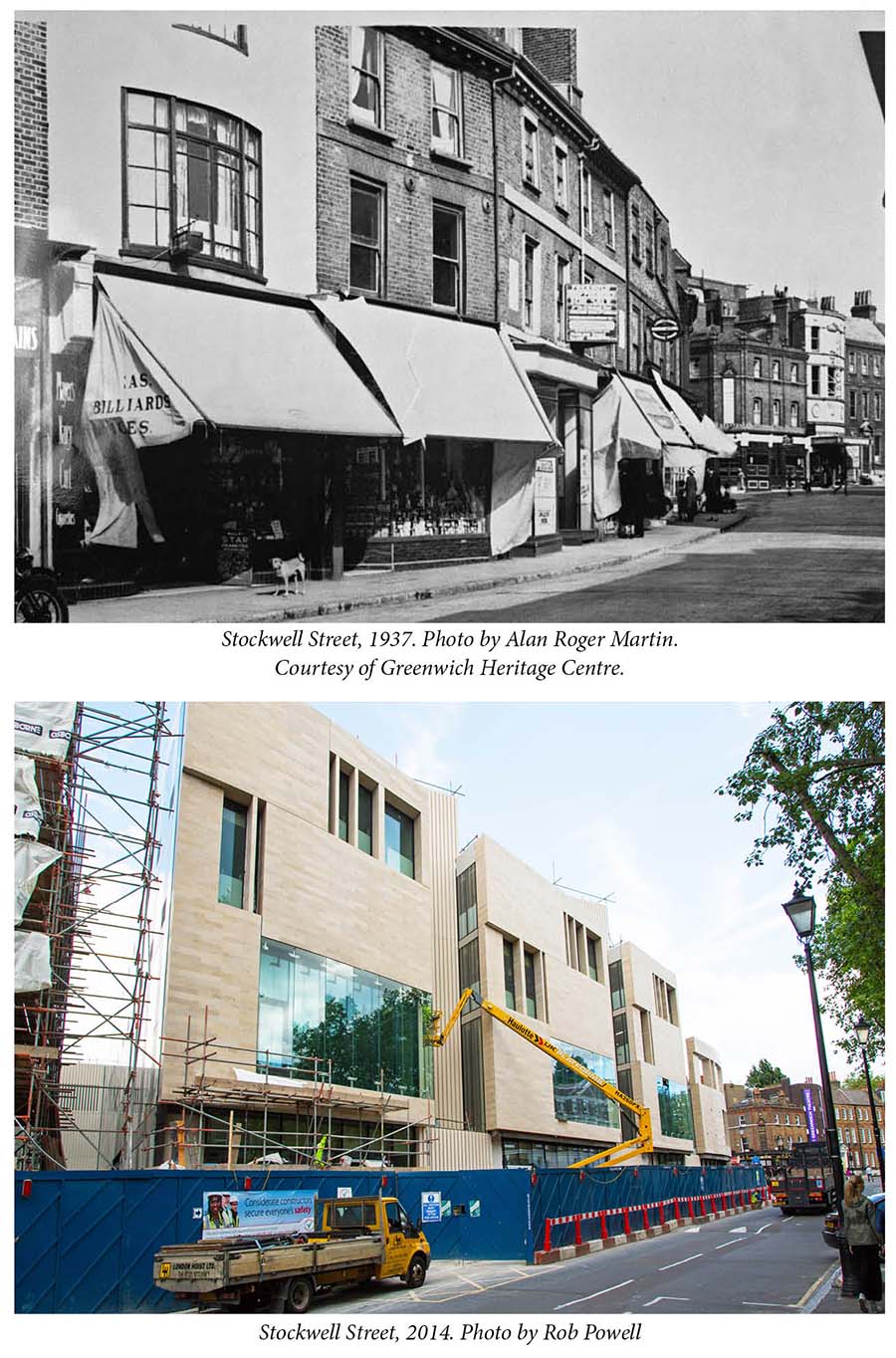
Greenwich Then and Now: Stockwell Street

27th January 2017 By ghsoc_admin Leave a Comment

Filed Under: Then and Now

AGM. The Rise and Fall of Robert Cocking

27th January 2017 By ghsoc_admin Leave a Comment

Wednesday 22 March 2017

AGM. The Rise and Fall of Robert Cocking

ANTHONY CROSS.

In his Address, Anthony Cross, President of Greenwich Historical Society, introduced the audience to Robert Cocking (1776-1837); artist, amateur scientist – and pioneer parachutist – who, in an attempt to demonstrate his device, fell to his death at Lee, near Greenwich, on 24 July 1837.

The talk looked at Cocking’s attempt in the context of the time that it was made: how in September 1802, he had witnessed André Jacques Garnerin descend by parachute in London, and had been moved by the sight of the wild oscillation of his chute. Then, how he had thereafter spent 35 years designing what he considered to be a better, safer model – an upside-down cone not unlike a dandelion seed head. Having finally persuaded Charles Green the balloonist to attach his parachute to the great Nassau balloon, the events of the fatal day at Vauxhall Gardens, were described in some detail.

There was some discussion of what had probably gone wrong; whether the attempt was doomed from the outset, or that poor manufacture was at fault. The talk also gave some thought to the most likely location of the spot where he fell to earth.

Cocking’s last moments, the macabre exhibition of the parachute and corpse, and the subsequent inquest held at the Tiger’s Head, were all covered, as well as his funeral at St Margaret’s (old) Church, Lee.

Anthony concluded by quoting the words of John Edmund Hodgson, the author of the ‘History of Aeronautics in Great Britain’: “[Cocking was] a victim to the very dangers which, with the ardent but unscientific enthusiasm of the amateur, he had so long sought to overcome. Nevertheless, it may justly be added that in his unobtrusive determination and quiet courage, he exhibited no small measure of that unselfish devotion to an idea – even unto death – characteristic of much greater pioneers”.

Our speaker then went off to the pub where he raised a glass to the memory of Daedalus.

Filed Under: Programme

Vanishing Greenwich: HOW WE CELEBRATED THE JUBILEE

27th January 2017 By ghsoc_admin Leave a Comment

Wednesday 22 February 2017

Vanishing Greenwich: HOW WE CELEBRATED THE JUBILEE

HORATIO BLOOD

In a change to the advertised programme, Horatio Blood takes his inspiration from Robert Byron’s delicious 1937 polemic How We Celebrate The Coronation and reflects upon the continuing erosion of the architectural fabric of Greenwich. He casts a particular gaze on the right royal wreckage that occurred during Greenwich’s annus horribilis of 2012 and wonders what on earth this UNESCO World Heritage Site has done to deserve this truly terrible treatment.

Meetings are held at James Wolfe School, Royal Hill Campus, Greenwich SE10 8RZ. Meetings commence at 7.30, doors open 7.15. We welcome non-members, from whom we invite a donation of £3 for each meeting. More useful information about our meetings can be found here.

Filed Under: Programme

Barbara Ludlow RIP

2nd May 2016 By ghsoc_admin 1 Comment

Barbara was a Wellard who were a remarkable local family heavily involved in local politics. Her parents – and in particular her communist uncle, Charlie – were well known in Greenwich and Woolwich. His son Chris’s record shop was the place to be in the 1960s. Her parents were both strong Labour Party activists. But Barbara made her own mark as an important Greenwich historian. Brought up in Greenwich she attended Invicta and then the Roan Schools.

Julian Watson writes ‘I started work in the Local History Room at the old Blackheath Library in St John’s Park 1965 and it wasn’t long before I became assistant to June Burkitt in the Local History Room. It was there that I first met Barbara and we got along well immediately. She had already finished her London University diploma course in local history and I remember reading her dissertation, which is preserved in the Greenwich Heritage Centre.

The Local History Library was a fairly new initiative, which was far too big for one small room so an attempt was made to create a Local History Library at Charlton House. Sadly this failed because suddenly ‘Woodlands’ in Mycenae Road was on the market and threatened with demolition. Greenwich Council acquired it and the Local History Library was created there rather than at Charlton House. I, with two new members of staff, moved the collections there in 1970 and Barbara, who had been working as an adult education lecturer, was appointed as our Education Officer and Senior Library Assistant – she had worked at the National Central Library. She did all our timesheets and most of the general administration because I was gathering in all the other large and dispersed collections: the Woolwich and Kent Collections from Woolwich Library, council archives from the old Greenwich Town hall and Woolwich Town hall plus collection from Eltham library.

Barbara was an outstanding historian and communicator and always great company. She was married to Roy Ludlow who was a very talented and engaging man. He designed bank note printing machines for De La Rue and had a very busy life particularly when former colonies became independent and needed their own currency. They had two sons, Christopher and Michael.
Barbara was needlessly anxious about her ability to write but produced many outstanding pieces of work. She wrote many fine articles in the Transactions of the Greenwich and Lewisham Antiquarian Society and the Journal of the Greenwich Historical Society, made a substantial contribution to Sally Jenkinson’s series of publications for the Gordon Teachers’ Centre – effectively a joint author. Barbara co-wrote the Combe Farm volume with Sally in that series. Barbara’s ‘Greenwich’ book for the History Press, published in 1994 has been reprinted many times and still sells well. She and I produced “The Twentieth Century: Greenwich” and later “Greenwich Then and Now.” She also contributed an important chapter to “Aspects of the Arsenal” which was published in 1997.

Barbara was a fine speaker and was, in retirement, recruited by the late Ivan Howletts, the producer of the Radio 4 ‘Making History’. They became friends and he used her on several of the programmes. She and I did one programme about the Enderby family of Greenwich. Her work in schools and colleges was much admired – the students were not only fascinated by the content of her talks but they also behaved well. She was a natural teacher and lecturer. A powerful memory for me and a great achievement for Barbara were her talks to the patients at Bexley Mental Hospital. There was constant noise from the audience, which flowed in and out of the room with much shouting, but it was a very great success and the patients all loved her visits.

Barbara was a natural scholar – she said that she had only one ambition and that was historical research. She applied great intellectual rigour to her research and writing, never fully trusting published works but always going to the primary sources. She solved the mystery of the local Domesday Book entries, which had defeated generations of learned professors and antiquarians. After her retirement she was contracted by Greenwich Libraries to research historical documents relating to the Royal Arsenal at Woolwich as part of the European funded Konver project. This she did with great thoroughness, researching at many repositories including The London Metropolitan Archives, The National Archives and the Ministry of Defence. It was a very fine piece of work. On my last visit to the Greenwich Heritage Centre, I noticed that a volunteer was using her work and was thrilled with what she had done.

I have missed and will always miss our regular long telephone conversations about historical matters and shared memories. To finish, I treasure this tribute from June Burkitt, Greenwich’s first Local History Librarian, in reply to my message telling her of Barbara’s death:
“She was an extraordinary person, highly intelligent, compassionate and with a strong sense of human justice and decency. I have never known anyone quite like her.”

Filed Under: Blog

  • « Previous Page
  • 1
  • 2

Copyright © 2026 · Agency Pro Theme On Genesis Framework · WordPress · Log in